
Print Big, Print Cheaper — Pellet 3D Printers in the Philippines

Print large parts straight from raw or recycled plastic pellets — faster, and at a fraction of filament cost. Industrial pellet 3D printers, supported nationwide.
Authorized distributor of Tumaker Local warranty, training & support Serving the Philippines from Caloocan, Metro Manila
Authorized distributor of Tumaker
Local warranty, training & support
Serving the Philippines from Caloocan, Metro Manila

Pellet 3D Printers We Offer in the Philippines

OmniFab distributes the Tumaker range of pellet 3D printers in the Philippines — from a 200 mm benchtop machine to a 500 × 500 × 500 mm industrial system — all backed by local warranty, training, and support.

Pellet 3D Printers We Offer in the Philippines

OmniFab distributes the Tumaker range of pellet 3D printers in the Philippines — from a 200 mm benchtop machine to a 500 × 500 × 500 mm industrial system — all backed by local warranty, training, and support.

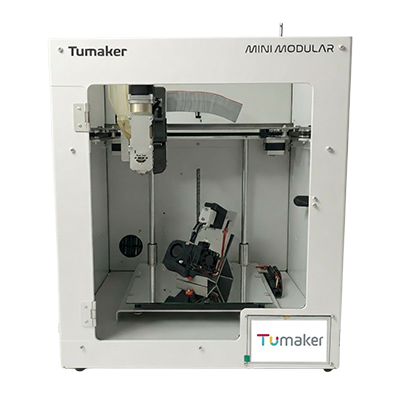
Tumaker Mini Modular 3D printer — OmniFab Philippines
SCHOOLS, FAB LABS, AND TEAMS TRYING PELLET PRINTING FOR THE FIRST TIME

Tumaker Mini Modular

A compact professional printer with an interchangeable printhead — swap between pellet and filament extrusion on the same machine. Enclosed and filtered, with a 50 °C heated chamber, in a footprint that fits a shared workspace.

Build volume: 200 × 200 × 200 mm
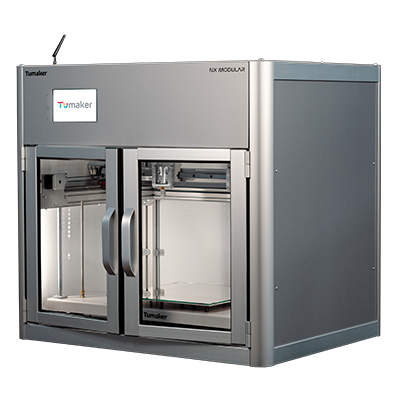
Tumaker NX Pro pellet 3D printer — OmniFab Philippines
MATERIALS R&D, SMALL FUNCTIONAL PARTS, AND SPECIALTY COMPOUNDS

Tumaker NX Pro Pellets

A dedicated benchtop pellet 3D printer with two extruder temperature control points and 10 µm layer resolution — built to run engineering and specialty pellets that simply aren’t sold as filament.

Build volume: 295 × 185 × 200 mm

Tumaker NX 300 Modular 3D printer — OmniFab Philippines
MID-SIZE PARTS AND MIXED PELLET + FILAMENT PRODUCTION

Tumaker NX 300 Modular

An interchangeable-head system that runs one or two extruders in any combination — pellet, filament, or pellet-and-pellet. Configure it per project without buying a second machine.

Build volume: 300 × 300 × 250 mm

Tumaker BIGFoot Pellets 200 large-format pellet 3D printer — OmniFab Philippines
WIDE, FLAT PARTS — MOULDS, PANELS, JIGS, AND FIXTURES

Tumaker BIGFoot Pellets 200

The entry point to the large-format BIGFoot series. A wide 500 × 470 mm bed with a 200 mm Z height, purpose-built for pellet extrusion at industrial deposition rates.

Build volume: 500 × 470 × 200 mm

Tumaker BIGFoot Pellets 350 large-format pellet 3D printer — OmniFab Philippines
LARGER PROTOTYPES, TOOLING, AND SHORT PRODUCTION RUNS

Tumaker BIGFoot Pellets 350

The same 500 × 470 mm large-format bed with 350 mm of Z height, for taller prototypes and tooling without moving up to a full production system.

Build volume: 500 × 470 × 350 mm

Tumaker BIGFoot Pellets 500 large-format pellet 3D printer — OmniFab Philippines
FURNITURE, LARGE MOULDS, AND CONTINUOUS PRODUCTION PARTS

Tumaker BIGFoot Pellets 500

The largest machine in the range: a full 500 × 500 × 500 mm build volume in an enclosed, filtered frame, running the same 0.4–5.0 mm nozzle set for anything from detailed to high-throughput work.

Build volume: 500 × 500 × 500 mm

Tumaker Bigfoot 500 Modular pellet 3D printer — OmniFab Philippines
PRODUCTION TEAMS THAT NEED ONE MACHINE TO COVER PELLET AND FILAMENT WORK

Tumaker BigFoot 500 Modular

The 500 mm cube in modular form — single or dual interchangeable heads across pellet and filament, with an automatic pellet feeder option and a 44 dB noise level suited to workshops and research labs.

Build volume: 500 × 500 × 500 mm

Tumaker Mini Modular 3D printer — OmniFab Philippines
SCHOOLS, FAB LABS, AND TEAMS TRYING PELLET PRINTING FOR THE FIRST TIME

Tumaker Mini Modular

A compact professional printer with an interchangeable printhead — swap between pellet and filament extrusion on the same machine. Enclosed and filtered, with a 50 °C heated chamber, in a footprint that fits a shared workspace.

Build volume: 200 × 200 × 200 mm
Tumaker NX Pro pellet 3D printer — OmniFab Philippines
MATERIALS R&D, SMALL FUNCTIONAL PARTS, AND SPECIALTY COMPOUNDS

Tumaker NX Pro Pellets

A dedicated benchtop pellet 3D printer with two extruder temperature control points and 10 µm layer resolution — built to run engineering and specialty pellets that simply aren’t sold as filament.

Build volume: 295 × 185 × 200 mm

Tumaker NX 300 Modular 3D printer — OmniFab Philippines
MID-SIZE PARTS AND MIXED PELLET + FILAMENT PRODUCTION

Tumaker NX 300 Modular

An interchangeable-head system that runs one or two extruders in any combination — pellet, filament, or pellet-and-pellet. Configure it per project without buying a second machine.

Build volume: 300 × 300 × 250 mm

Tumaker BIGFoot Pellets 200 large-format pellet 3D printer — OmniFab Philippines
WIDE, FLAT PARTS — MOULDS, PANELS, JIGS, AND FIXTURES

Tumaker BIGFoot Pellets 200

The entry point to the large-format BIGFoot series. A wide 500 × 470 mm bed with a 200 mm Z height, purpose-built for pellet extrusion at industrial deposition rates.

Build volume: 500 × 470 × 200 mm

Tumaker BIGFoot Pellets 350 large-format pellet 3D printer — OmniFab Philippines
LARGER PROTOTYPES, TOOLING, AND SHORT PRODUCTION RUNS

Tumaker BIGFoot Pellets 350

The same 500 × 470 mm large-format bed with 350 mm of Z height, for taller prototypes and tooling without moving up to a full production system.

Build volume: 500 × 470 × 350 mm

Tumaker BIGFoot Pellets 500 large-format pellet 3D printer — OmniFab Philippines
FURNITURE, LARGE MOULDS, AND CONTINUOUS PRODUCTION PARTS

Tumaker BIGFoot Pellets 500

The largest machine in the range: a full 500 × 500 × 500 mm build volume in an enclosed, filtered frame, running the same 0.4–5.0 mm nozzle set for anything from detailed to high-throughput work.

Build volume: 500 × 500 × 500 mm

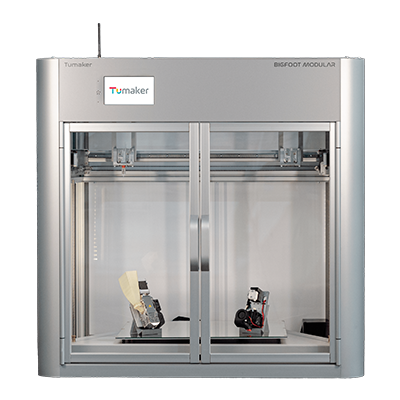
Tumaker Bigfoot 500 Modular pellet 3D printer — OmniFab Philippines
PRODUCTION TEAMS THAT NEED ONE MACHINE TO COVER PELLET AND FILAMENT WORK

Tumaker BigFoot 500 Modular

The 500 mm cube in modular form — single or dual interchangeable heads across pellet and filament, with an automatic pellet feeder option and a 44 dB noise level suited to workshops and research labs.

Build volume: 500 × 500 × 500 mm
Add the Automatic Pellet Feeder to any pellet head to feed the hopper directly and remove manual material loading from your workflow.

Building a Fab Lab? We Set Up the Whole Facility

A pellet 3D printer rarely arrives alone. For universities, government-backed innovation centres, and company R&D labs, OmniFab plans and equips the entire facility — pellet and filament 3D printers, 3D scanning, CNC machining, vacuum forming, and filament making — then handles installation, operator training, and ongoing support.

Tell us the space, the budget, and what your team needs to produce, and we'll spec the lab around it.

What You Can Make with a Pellet 3D Printer

Pellet extrusion is built for parts that are too big, too slow, or too expensive to print from filament. Because the printer feeds on raw granulate and pushes far more material per hour, it turns week-long builds into overnight ones. Common uses:

  • Large moulds, formwork, and vacuum-forming tooling
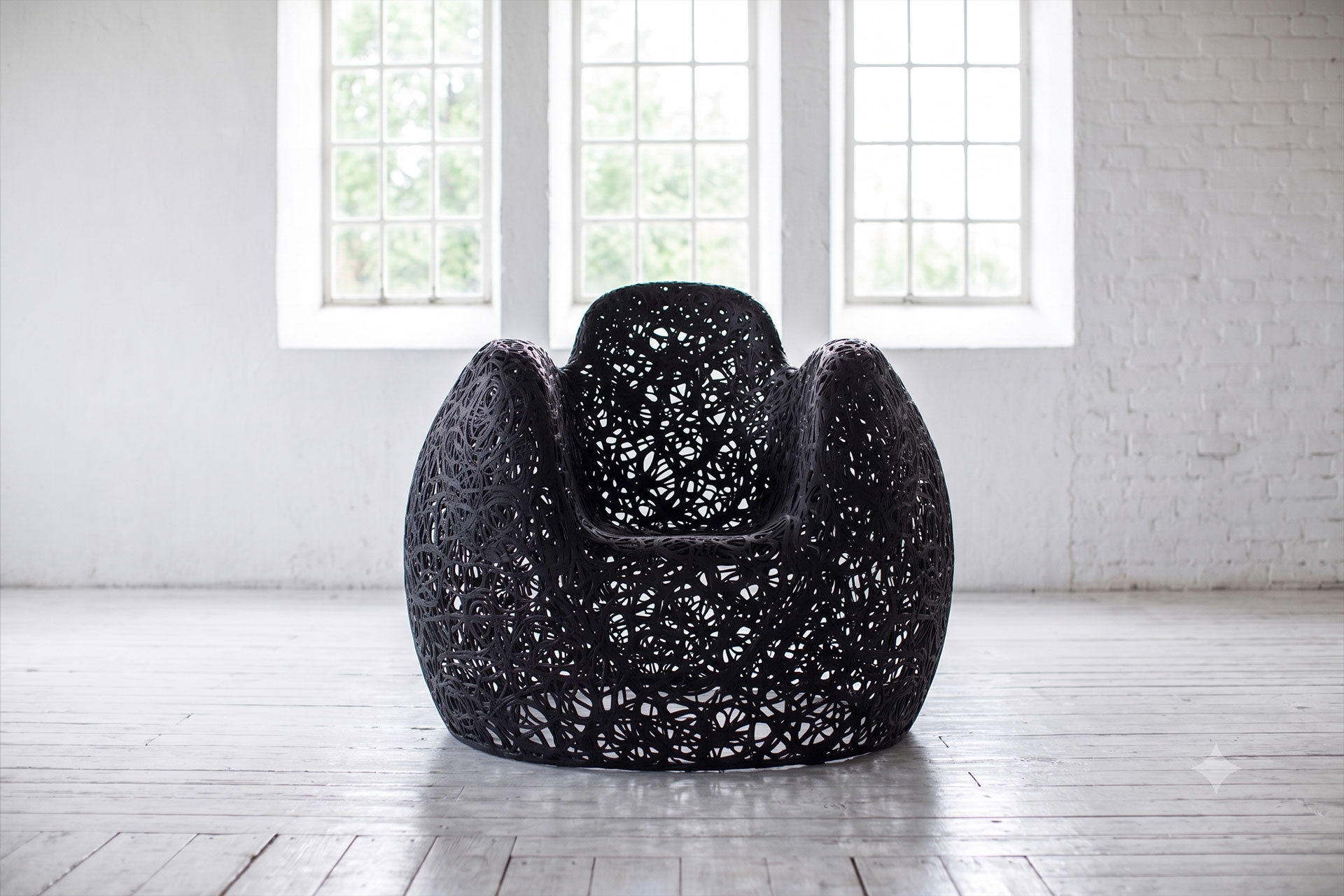
  • Furniture, fixtures, and interior design elements
  • Jigs, fixtures, and factory tooling
  • Automotive panels, interior parts, and production aids
  • Architectural models and façade components
  • Large functional prototypes and end-use parts

Industries using pellet 3D printing in the Philippines include manufacturing, automotive, furniture and interior design, construction and architecture, packaging, and universities and fab labs.

Large-scale Pellet 3D Printed Black Furniture Armchair
Precision 3D printed metal components, tooling, and functional industrial end-use parts

What You Can Make with a Pellet 3D Printer

Pellet extrusion is built for parts that are too big, too slow, or too expensive to print from filament. Because the printer feeds on raw granulate and pushes far more material per hour, it turns week-long builds into overnight ones. Common uses:

  • Large moulds, formwork, and vacuum-forming tooling
  • Furniture, fixtures, and interior design elements
  • Jigs, fixtures, and factory tooling
  • Automotive panels, interior parts, and production aids
  • Architectural models and façade components
  • Large functional prototypes and end-use parts

Industries using pellet 3D printing in the Philippines include manufacturing, automotive, furniture and interior design, construction and architecture, packaging, and universities and fab labs.

What Materials Pellet 3D Printers Use

This is where pellet printing pulls ahead. Because the machine feeds on standard injection-moulding granulate, you can run engineering and specialty compounds that are never sold as filament — including metal- and ceramic-filled pellets. Tumaker’s pellet extruders are qualified for:

What Materials Pellet 3D Printers Use

This is where pellet printing pulls ahead. Because the machine feeds on standard injection-moulding granulate, you can run engineering and specialty compounds that are never sold as filament — including metal- and ceramic-filled pellets. Tumaker’s pellet extruders are qualified for:

Material groupVerified optionsTypical uses
Standard thermoplasticsPLA, ABS, ASA, PETG, PP, LDPE, PVC, SAN, PPC 7712Prototypes, housings, general parts
FlexibleSoft TPU Sh18A, SEBS, FLEXA 93Seals, gaskets, soft-touch and impact parts
Engineering polymersPC, PC+PBT, PC/ASA, PA6 + 30 % GF, PA66 + 30 % GF, Grilon BK-30, PCLLoad-bearing, wear-resistant, heat-exposed parts
High-performancePEI (Ultem), PEKKAerospace, medical, high-temperature components
Fibre-reinforcedPP + 30 % CF, PC + 20 % CF, ABS + CF, glass-filled nylonsStiff, dimensionally stable tooling and structural parts
Metal, ceramic & filledCatamold 316L (sinterable stainless), Ceramic Al2O3, Wood-filled, PA16 + Ferrite, PA12 + Neodymium, PP + mineral fillerSinterable metal and ceramic parts, magnetic components, decorative finishes
RecycledRecycled polymer pellets and regrindCircular manufacturing and lower material cost

Recommended pellet size across the range is circular, 3–5 mm in diameter. Need a compound that isn’t listed? Tumaker’s pellet platform is open — talk to us and we’ll check compatibility.

Which Tumaker Pellet 3D Printer Is Right for You?

Every Tumaker pellet machine uses the same extrusion technology — they differ in build volume and how flexible the printhead is. Start with the size of the part you need to make:

Which Tumaker Pellet 3D Printer Is Right for You?

Every Tumaker pellet machine uses the same extrusion technology — they differ in build volume and how flexible the printhead is. Start with the size of the part you need to make:

MachineBuild volumePrintheadBest for
Tumaker Mini Modular200 × 200 × 200 mmInterchangeable pellet or filamentCompact spaces, education, first pellet machine
Tumaker NX Pro Pellets295 × 185 × 200 mmDedicated pelletMaterials R&D, small functional parts
Tumaker NX 300 Modular300 × 300 × 250 mm1 or 2 heads: pellet, filament, or pellet + pelletMid-size parts, mixed workflows
Tumaker BIGFoot Pellets 200500 × 470 × 200 mmDedicated pelletWide, flat parts — moulds, panels, jigs
Tumaker BIGFoot Pellets 350500 × 470 × 350 mmDedicated pelletTaller prototypes and tooling
Tumaker BIGFoot Pellets 500500 × 500 × 500 mmDedicated pelletFurniture, large moulds, production parts
Tumaker BigFoot 500 Modular500 × 500 × 500 mmSingle or dual, pellet and/or filamentOne machine covering pellet + filament production
Nozzles 0.4 / 0.6 / 0.8 / 2.0 / 4.0 / 5.0 mm · Head temperature up to 300 °C · Heated bed up to 100 °C · 10 μm layer resolution · Automatic calibration · Enclosed with filters, 44 dB · Wi-Fi, Ethernet and Micro SD · Simplify3D licence included, plus Cura and SuperSlicer · STL, OBJ, G-code

Not sure which fits? Tell us your part size, material, and monthly volume — our team will recommend the right Tumaker machine and configuration.

FAQs on Pellet 3D Printers in the Philippines

How much does a pellet 3D printer cost in the Philippines?

Pellet 3D printer prices in the Philippines depend on build volume and printhead configuration — a compact 200 mm machine and a 500 × 500 × 500 mm industrial system sit at very different price points. The bigger saving is ongoing: raw pellets cost far less per kilogram than spooled filament, so the more you print, the faster the machine pays for itself. Contact OmniFab for a quote based on your parts and volume.

Which Tumaker pellet 3D printer should I buy?

Start with the size of the part you need to make. The Tumaker Mini Modular (200 × 200 × 200 mm) suits compact spaces and first-time pellet users; the NX Pro Pellets (295 × 185 × 200 mm) is built for materials R&D; the NX 300 Modular (300 × 300 × 250 mm) handles mid-size parts with one or two interchangeable heads; and the BIGFoot Pellets series (up to 500 × 500 × 500 mm) covers large moulds, furniture, and production work. Tell us your part size, material, and volume and we’ll recommend the right fit.

What materials can Tumaker pellet 3D printers use?

Tumaker’s pellet extruders are qualified for standard thermoplastics (PLA, ABS, ASA, PETG, PP, PVC), flexibles (soft TPU, SEBS), engineering polymers (PC, nylon with 30% glass fibre, PC/ASA), high-performance materials (PEI Ultem, PEKK), fibre-reinforced compounds (PP and PC with carbon fibre, ABS+CF), and specialty pellets including Catamold 316L sinterable stainless steel, Ceramic Al2O3, wood-filled, and magnetic ferrite and neodymium compounds. Recycled pellets and regrind also run directly. Recommended pellet size is circular, 3 to 5 mm in diameter.

How large can a pellet 3D printer print?

OmniFab’s Tumaker range goes from 200 × 200 × 200 mm on the Mini Modular up to 500 × 500 × 500 mm on the BIGFoot Pellets 500 and BigFoot 500 Modular. The BIGFoot Pellets 200 and 350 offer a wide 500 × 470 mm bed at 200 mm and 350 mm heights, which suits large, flat parts like moulds and panels.

Can I use recycled plastic pellets in a pellet 3D printer?

Yes. Feeding recycled polymer pellets or regrind directly into the extruder is one of the main advantages of pellet printing, and every Tumaker pellet head supports it. It lowers material cost and supports circular manufacturing, which is why universities and sustainability-focused manufacturers often choose pellet systems over filament.

Can one machine print with both pellets and filament?

Yes. The Tumaker Mini Modular, NX 300 Modular, and BigFoot 500 Modular use interchangeable printheads, so you can swap between pellet and filament extrusion on the same machine. The NX 300 Modular and BigFoot 500 Modular also run dual-head configurations, including pellet plus filament or pellet plus pellet.

Does OmniFab deliver, install, and support pellet 3D printers nationwide?

Yes. OmniFab is a Philippine distributor based in Caloocan, Metro Manila, serving clients across the country. Every machine includes consultation, delivery, installation, operator training, and after-sales support, so your team is producing parts rather than troubleshooting hardware.

Can a pellet 3D printer be part of a fab lab setup?

Yes, and it often is. Pellet printers pair well with filament printers, 3D scanners, CNC machines, and filament-making equipment in a single facility. OmniFab plans and equips complete fab labs for universities, innovation centres, and company R&D teams, including installation, training, and ongoing support.

FAQs on Pellet 3D Printers in the Philippines

How much does a pellet 3D printer cost in the Philippines?

Pellet 3D printer prices in the Philippines depend on build volume and printhead configuration — a compact 200 mm machine and a 500 × 500 × 500 mm industrial system sit at very different price points. The bigger saving is ongoing: raw pellets cost far less per kilogram than spooled filament, so the more you print, the faster the machine pays for itself. Contact OmniFab for a quote based on your parts and volume.

Which Tumaker pellet 3D printer should I buy?

Start with the size of the part you need to make. The Tumaker Mini Modular (200 × 200 × 200 mm) suits compact spaces and first-time pellet users; the NX Pro Pellets (295 × 185 × 200 mm) is built for materials R&D; the NX 300 Modular (300 × 300 × 250 mm) handles mid-size parts with one or two interchangeable heads; and the BIGFoot Pellets series (up to 500 × 500 × 500 mm) covers large moulds, furniture, and production work. Tell us your part size, material, and volume and we’ll recommend the right fit.

What materials can Tumaker pellet 3D printers use?

Tumaker’s pellet extruders are qualified for standard thermoplastics (PLA, ABS, ASA, PETG, PP, PVC), flexibles (soft TPU, SEBS), engineering polymers (PC, nylon with 30% glass fibre, PC/ASA), high-performance materials (PEI Ultem, PEKK), fibre-reinforced compounds (PP and PC with carbon fibre, ABS+CF), and specialty pellets including Catamold 316L sinterable stainless steel, Ceramic Al2O3, wood-filled, and magnetic ferrite and neodymium compounds. Recycled pellets and regrind also run directly. Recommended pellet size is circular, 3 to 5 mm in diameter.

How large can a pellet 3D printer print?

OmniFab’s Tumaker range goes from 200 × 200 × 200 mm on the Mini Modular up to 500 × 500 × 500 mm on the BIGFoot Pellets 500 and BigFoot 500 Modular. The BIGFoot Pellets 200 and 350 offer a wide 500 × 470 mm bed at 200 mm and 350 mm heights, which suits large, flat parts like moulds and panels.

Can I use recycled plastic pellets in a pellet 3D printer?

Yes. Feeding recycled polymer pellets or regrind directly into the extruder is one of the main advantages of pellet printing, and every Tumaker pellet head supports it. It lowers material cost and supports circular manufacturing, which is why universities and sustainability-focused manufacturers often choose pellet systems over filament.

Can one machine print with both pellets and filament?

Yes. The Tumaker Mini Modular, NX 300 Modular, and BigFoot 500 Modular use interchangeable printheads, so you can swap between pellet and filament extrusion on the same machine. The NX 300 Modular and BigFoot 500 Modular also run dual-head configurations, including pellet plus filament or pellet plus pellet.

Does OmniFab deliver, install, and support pellet 3D printers nationwide?

Yes. OmniFab is a Philippine distributor based in Caloocan, Metro Manila, serving clients across the country. Every machine includes consultation, delivery, installation, operator training, and after-sales support, so your team is producing parts rather than troubleshooting hardware.

Can a pellet 3D printer be part of a fab lab setup?

Yes, and it often is. Pellet printers pair well with filament printers, 3D scanners, CNC machines, and filament-making equipment in a single facility. OmniFab plans and equips complete fab labs for universities, innovation centres, and company R&D teams, including installation, training, and ongoing support.

Ready to bring pellet 3D printing into your operation?

Get in touch to compare machines, request a quote, or plan a full fab lab. We serve engineers, manufacturers, and universities nationwide from our office in Caloocan, Metro Manila.