

 Official Philippine distributor of COBOD construction 3D printers
  Runs on standard local concrete
  Nationwide support from Caloocan CityOfficial Philippine distributor of COBOD construction 3D printersRuns on standard local concreteNationwide support from Caloocan City


Faster construction
The structural shell can go up in days instead of weeks or months.

Lower labor cost
A small crew operates the printer, reducing dependence on large manual workforces.

Less material waste
Concrete is placed only where needed, unlike cut-and-fill methods.

Design freedom
Curved walls and complex geometries print at no extra tooling cost.

Durability
Printed concrete structures are solid and long-lasting when engineered and finished properly.

Sustainability
Less waste, efficient material use, and the option of local, lower-carbon concrete mixes.
Faster construction
The structural shell can go up in days instead of weeks or months.
Lower labor cost
A small crew operates the printer, reducing dependence on large manual workforces.
Less material waste
Concrete is placed only where needed, unlike cut-and-fill methods.
Design freedom
Curved walls and complex geometries print at no extra tooling cost.
Durability
Printed concrete structures are solid and long-lasting when engineered and finished properly.
Sustainability
Less waste, efficient material use, and the option of local, lower-carbon concrete mixes.

The printer is a capital investment, quoted per configuration and build size. Because COBOD systems run on standard local concrete — material that can be many times cheaper than proprietary mixes — the ongoing cost per house can be significantly lower than conventional methods once the equipment is in place.

Per-house cost varies with floor area, wall design, finishes, site conditions, and local labor and material rates. Internationally, printed low-cost home shells have been delivered well below traditional-build prices; your real figure depends on the project.
The printer is a capital investment, quoted per configuration and build size. Because COBOD systems run on standard local concrete — material that can be many times cheaper than proprietary mixes — the ongoing cost per house can be significantly lower than conventional methods once the equipment is in place.
Per-house cost varies with floor area, wall design, finishes, site conditions, and local labor and material rates. Internationally, printed low-cost home shells have been delivered well below traditional-build prices; your real figure depends on the project.

Real-estate developers
Faster delivery of subdivisions and low-cost housing.

Contractors & construction firms
A competitive edge on speed and labor cost.

LGUs & government housing programs
Scalable, affordable, resilient homes.

Resorts & hospitality
Distinctive curved, architectural structures.

NGOs & social-housing groups
Rapid, low-cost shelter.
Real-estate developers
Faster delivery of subdivisions and low-cost housing.
Contractors & construction firms
A competitive edge on speed and labor cost.
LGUs & government housing programs
Scalable, affordable, resilient homes.
Resorts & hospitality
Distinctive curved, architectural structures.
NGOs & social-housing groups
Rapid, low-cost shelter.
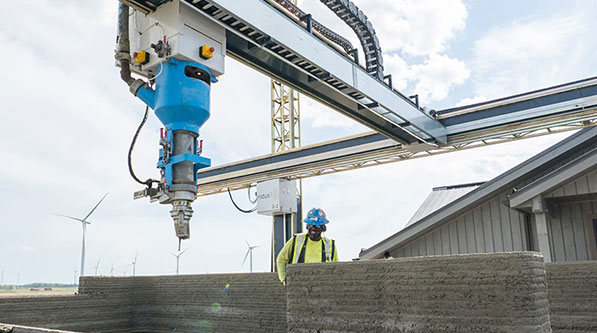
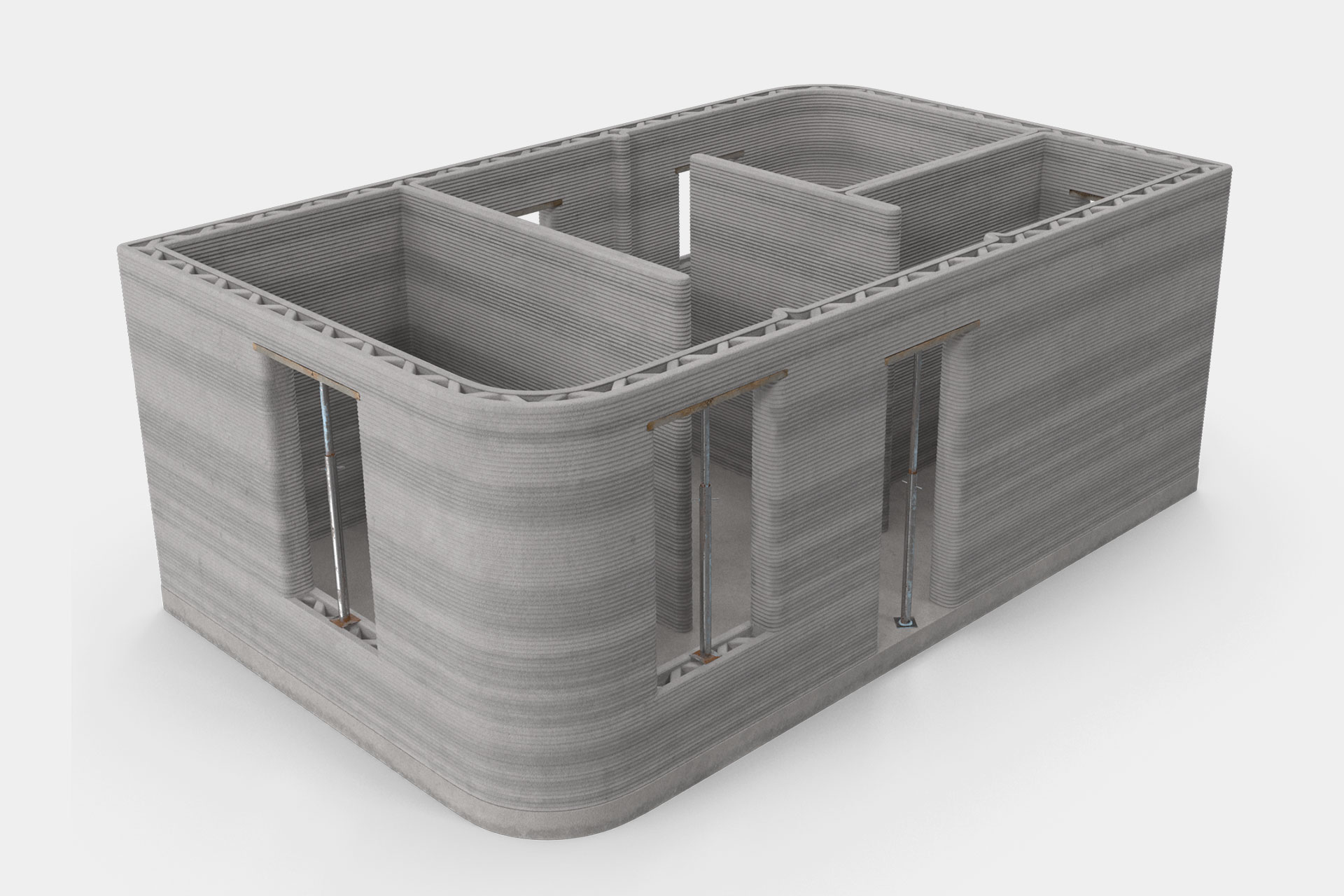
A 3D printed house is a home built by a large construction 3D printer that extrudes concrete layer by layer from a digital design, forming the walls and structural shell. It’s built faster and with less labor and waste than traditional construction.
The printed structural shell of a small home (around 50 m²) can be completed in roughly a day of active printing with a machine. Full completion — roofing, windows, utilities, and finishes — takes additional time using conventional trades, but total project timelines are still much shorter than traditional builds.
It depends on the home’s size and design and on the printer configuration. The construction 3D printer is a capital investment quoted per configuration, but because COBOD systems use standard local concrete, the per-house material cost can be substantially lower than conventional methods. Contact OmniFab for a project-based quote.
Yes. There’s no dedicated 3D-printing building code yet, so projects are approved individually and must comply with the National Building Code (PD 1096) and the National Structural Code of the Philippines (NSCP), with sign-off from a licensed structural engineer.
Yes, when properly engineered. Printed concrete homes are strong and long-lasting and must be designed to withstand earthquakes and typhoons under the NSCP, giving them a service life comparable to traditional houses.
A specially formulated concrete mix. COBOD printers use standard, locally sourced concrete with no proprietary material required, which keeps material costs and lead times down in the Philippines.
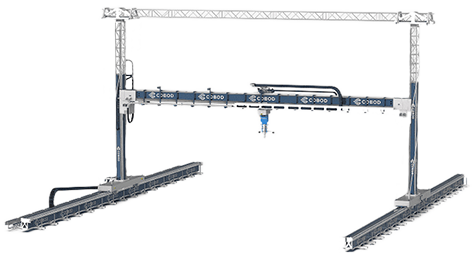
Yes. OmniFab is the local distributor for COBOD construction 3D printer — BOD3 — with consultation, installation guidance, and after-sales support.
A well-engineered and properly finished 3D printed concrete house can last several decades — comparable to traditional concrete construction — depending on materials, design, and maintenance.
A 3D printed house is a home built by a large construction 3D printer that extrudes concrete layer by layer from a digital design, forming the walls and structural shell. It’s built faster and with less labor and waste than traditional construction.
The printed structural shell of a small home (around 50 m²) can be completed in roughly a day of active printing with a machine. Full completion — roofing, windows, utilities, and finishes — takes additional time using conventional trades, but total project timelines are still much shorter than traditional builds.
It depends on the home’s size and design and on the printer configuration. The construction 3D printer is a capital investment quoted per configuration, but because COBOD systems use standard local concrete, the per-house material cost can be substantially lower than conventional methods. Contact OmniFab for a project-based quote.
Yes. There’s no dedicated 3D-printing building code yet, so projects are approved individually and must comply with the National Building Code (PD 1096) and the National Structural Code of the Philippines (NSCP), with sign-off from a licensed structural engineer.
Yes, when properly engineered. Printed concrete homes are strong and long-lasting and must be designed to withstand earthquakes and typhoons under the NSCP, giving them a service life comparable to traditional houses.
A specially formulated concrete mix. COBOD printers use standard, locally sourced concrete with no proprietary material required, which keeps material costs and lead times down in the Philippines.
Yes. OmniFab is the local distributor for COBOD construction 3D printer — BOD3 — with consultation, installation guidance, and after-sales support.
A well-engineered and properly finished 3D printed concrete house can last several decades — comparable to traditional concrete construction — depending on materials, design, and maintenance.