

Blog
Fab Lab vs. Makerspace: What’s the Difference and Why It Matters

If you’ve ever come across the terms fab lab and makerspace, you’ve probably wondered if they’re the same thing. They sound similar, both involve tools and creativity, and both are often linked to innovation and tech.
They overlap, but they are not the same. And understanding the difference actually matters more than most people think, especially if you’re into education, engineering, startups, or innovation spaces like the fab lab movement in the Philippines.
Let’s break it down clearly.
Quick Summary: Fab Lab vs. Makerspace
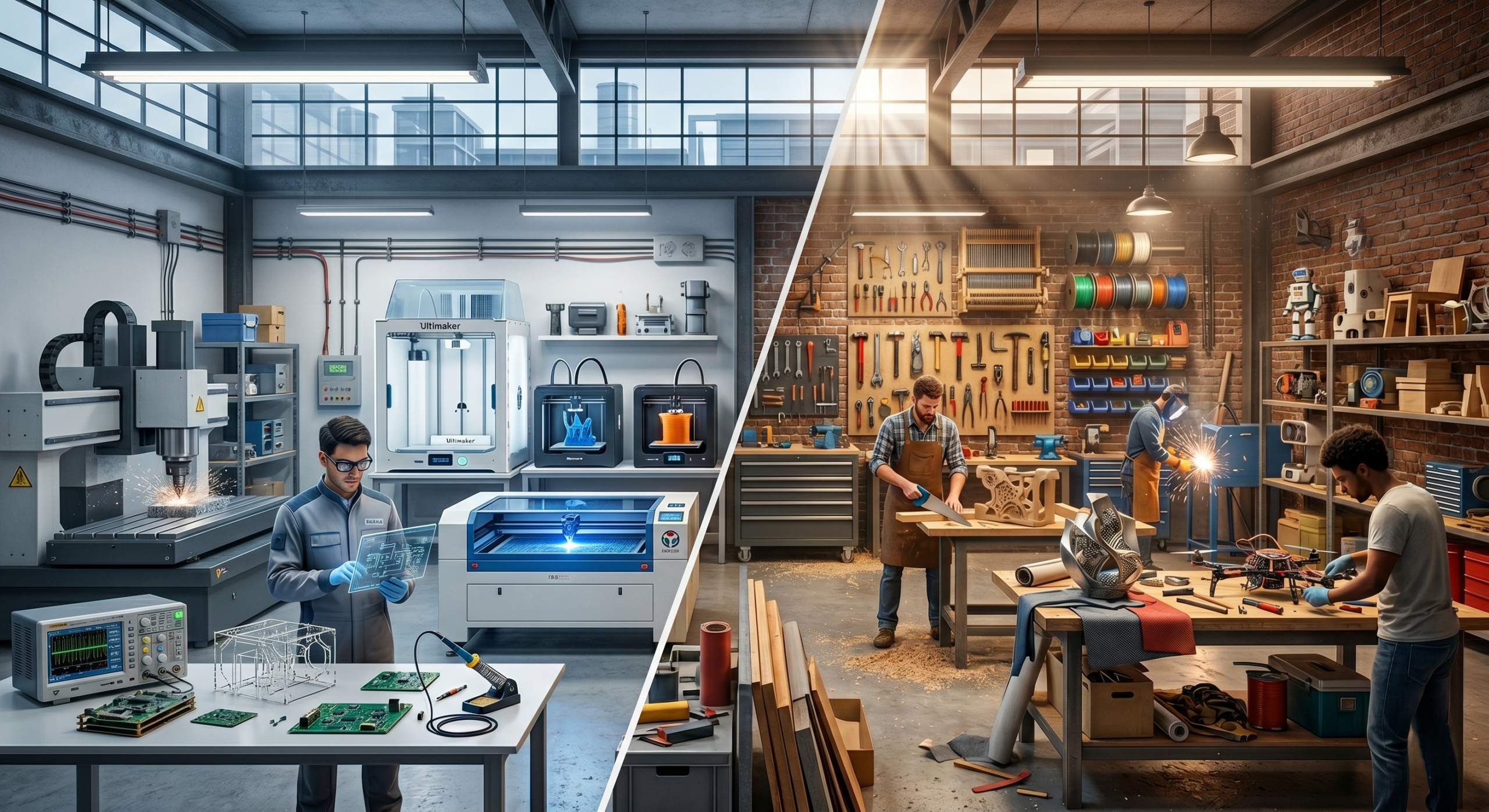
- The Core Difference: A fab lab is a standardized, technical laboratory part of a global MIT-linked network. A makerspace is a flexible, community-driven workshop that varies by location.
- The Toolset: Fab labs focus on digital fabrication (CNC, Laser, 3D printing). Makerspaces offer a hybrid mix (from high-tech electronics to traditional crafts like woodworking or sewing).
- The Goal: Choose a fab lab for high-precision prototyping and engineering. Choose a makerspace for creative exploration, DIY hobbies, and community collaboration.
On This Page
- What is a Fab Lab?
- What is a Makerspace?
- Fab Lab vs. Makerspace: Comparison Overview
- Fab Lab in the Philippines: Growing Innovation Hubs
- Common Misconceptions About Fab Labs and Makerspaces
- Final Thoughts on Fab Lab vs Makerspace: Which One Should You Choose?
- Frequently Asked Questions (FAQs)
What is a Fab Lab?
A Fab Lab (Fabrication Laboratory) is a structured innovation space with access to advanced digital fabrication tools. It originated from Massachusetts Institute of Technology’s (MIT) Center for Bits and Atoms (CBA) and follows a global framework.
Simply put, it is a small workshop with computer-controlled tools that lets users design and fabricate almost anything.
Related: What is a Fab Lab? A Beginner’s Guide to Digital Fabrication Spaces
What makes a Fab Lab unique?
Fab labs are not just random workshops. They usually follow a global standard that includes:
1. Standard equipment setup
Most fab labs include:
- 3D printers
- Laser cutters
- CNC machines
- Electronics workstations
- CAD design software
2. Structured learning and documentation
Projects are often documented and shared globally. This creates a knowledge network across countries.
3. Innovation-driven use cases
Fab labs are commonly used for:
- Engineering prototypes
- Academic research
- Product development
- Social innovation projects
NOTE: When people refer to Fab Lab, they’re talking about a globally connected digital fabrication ecosystem, not just a workshop.
What is a Makerspace?
A Makerspace is a community-driven workshop where people can build, experiment, and learn using shared tools. In other words, it’s a collaborative space where individuals create and explore ideas using a variety of materials and equipment.
What makes a Makerspace different?
Unlike fab labs, makerspaces are more flexible and less standardized.
1. Community-first environment
Makerspaces are often:
- Open to hobbyists
- Used by students, artists, and DIY creators
- Less formal in structure
2. Wider range of tools
Depending on the space, you might find:
- Craft tools (woodworking, sewing machines)
- Basic electronics kits
- 3D printers (sometimes, but not always advanced setups)
- Art and prototyping materials
3. Learning through exploration
Makerspaces focus more on:
- Hands-on learning
- Creativity and experimentation
- Personal or small group projects
So while Fab Labs lean toward structured innovation, Makerspaces lean toward creative freedom.
Fab Lab vs. Makerspace: Comparison Overview
| Category | Fab Lab | Makerspace |
|---|---|---|
| Structure and Standardization | Follows global standards (MIT Fab Lab network) | No fixed global structure |
| Purpose and Focus | Innovation, prototyping, research, product development | Creativity, learning, experimentation, DIY projects |
| Tools and Technology | Advanced digital fabrication tools (CNC, laser cutting, industrial-grade 3D printing) | Mixed tools (craft tools, basic digital tools, creative equipment) |
| Users and Community | Engineers, researchers, startups, academic institutions | Students, hobbyists, artists, general community |
| Output and Results | Functional prototypes and engineered solutions | Creative projects, learning outputs, experimental builds |
Fab Lab in the Philippines: Growing Innovation Hubs
Innovation hubs and digital fabrication spaces in the Philippines have been growing steadily over the past few years, especially in universities and innovation centers.
These labs are helping bridge the gap between:
- Traditional education
- Industry-level manufacturing
- Startup prototyping needs
Related: How Fab Labs in the Philippines Are Transforming Education and Innovation
Many Filipino students now have access to tools like:
- 3D printing for engineering projects
- CNC machining for product design
- Digital prototyping for research and thesis development
This is important because it makes advanced fabrication technology more accessible—not just something reserved for large companies or overseas labs.
Common Misconceptions About Fab Labs and Makerspaces
Because both involve tools, creativity, and hands-on work, fab labs and makerspaces are often mistaken as the same thing. While they do overlap, there are still key differences that many people misunderstand.
Let’s clear things up.
Myth #1: “They are basically the same thing”
Truth: They share similarities, but they are built differently.
A fab lab follows a more structured setup with standardized digital fabrication tools and processes. It’s often focused on prototyping, precision, and innovation-driven projects.
A makerspace is usually more flexible and community-based. The setup can vary depending on the people managing the space and the resources available.
So while both encourage creativity and making, they serve slightly different purposes.
Myth #2: “Makerspaces are less advanced”
Truth: Capability depends on the space—not the label.
Some Makerspaces are highly equipped and can be just as advanced as certain Fab Labs. The real difference is usually in the structure and consistency of the environment.
Fab labs tend to follow a standardized model, while Makerspaces adapt to the needs of their local community. One may focus on beginner-friendly learning, while another may support highly technical projects.
Myth #3: “Fab Labs are only for engineers or experts”
Truth: Fab labs are designed for learning too.
While fab labs support engineering, research, and technical work, they’re not limited to professionals. Many are open to students, startups, hobbyists, and beginners interested in learning digital fabrication tools.
The environment may be more structured, but it’s still built to encourage experimentation and innovation.
Myth #4: “You have to choose one over the other”
Truth: Many creators use both.
Fab labs and makerspaces often complement each other instead of competing.
For example:
- A fab lab may be used for precise prototyping and technical builds
- A makerspace may be better for brainstorming, experimenting, and early-stage ideas
In growing innovation communities in the Philippines, both types of spaces help support creativity, collaboration, and hands-on learning.
Related: How Fab Labs in the Philippines Are Empowering Local Communities
Final Thoughts on Fab Lab vs. Makerspace: Which One Should You Choose?
Choosing between the two isn’t really about which one is better—it’s about finding the environment that matches your needs.
Fab labs are typically better suited for structured workflows, precision, and technical prototyping using digital fabrication tools. Makerspaces, meanwhile, offer a more flexible setup that encourages experimentation, collaboration, and hands-on creativity.
Both play valuable roles in innovation and often work side by side. Many creators even use both depending on their project stage, from brainstorming early concepts to developing more refined builds.
As innovation spaces continue to grow in the Philippines, these environments are helping make technology, learning, and creation more accessible to a wider community.
At the end of the day, understanding how each space works makes it easier to decide where your ideas can grow best.
Frequently Asked Questions (FAQs)
What is the main difference between Fab Lab and Makerspace?
While a fab lab is built around standardized digital fabrication and prototyping, a makerspace is centered on flexibility, collaboration, and creative experimentation.
What is a Fab Lab?
A fab lab is a fabrication laboratory equipped with digital tools like 3D printers and CNC machines used for prototyping and innovation.
What is a Makerspace?
A makerspace is a shared workshop where people can create, learn, and experiment using various tools and materials.
Are Fab Labs available in the Philippines?
Yes, there are growing fab labs in the Philippines initiatives in schools, universities, and innovation hubs.
Ready to innovate? Discover how a Fab Lab in the Philippines helps turn ideas into prototypes through hands-on digital fabrication and creative collaboration.