

Blog
Common Misconceptions About Fab Labs (And the Truth Behind Them)

Fab labs are often misunderstood, especially by people who are hearing about them for the first time. Some think they’re only for engineers. Others assume they’re expensive, overly technical, or limited to big institutions.
But here’s the truth: a fab lab is much more accessible, flexible, and practical than most people realize.
In this article, we’ll break down the most common fab lab misconceptions, explain myths vs. facts, and help you clearly understand what it is and how it works in real life.
Key Takeaways: What You Need to Know First
If you only have a minute, here is the real truth about Fab Labs:
- Built for Everyone: You do not need an engineering degree. Fab labs welcome beginners, artists, entrepreneurs, and students.
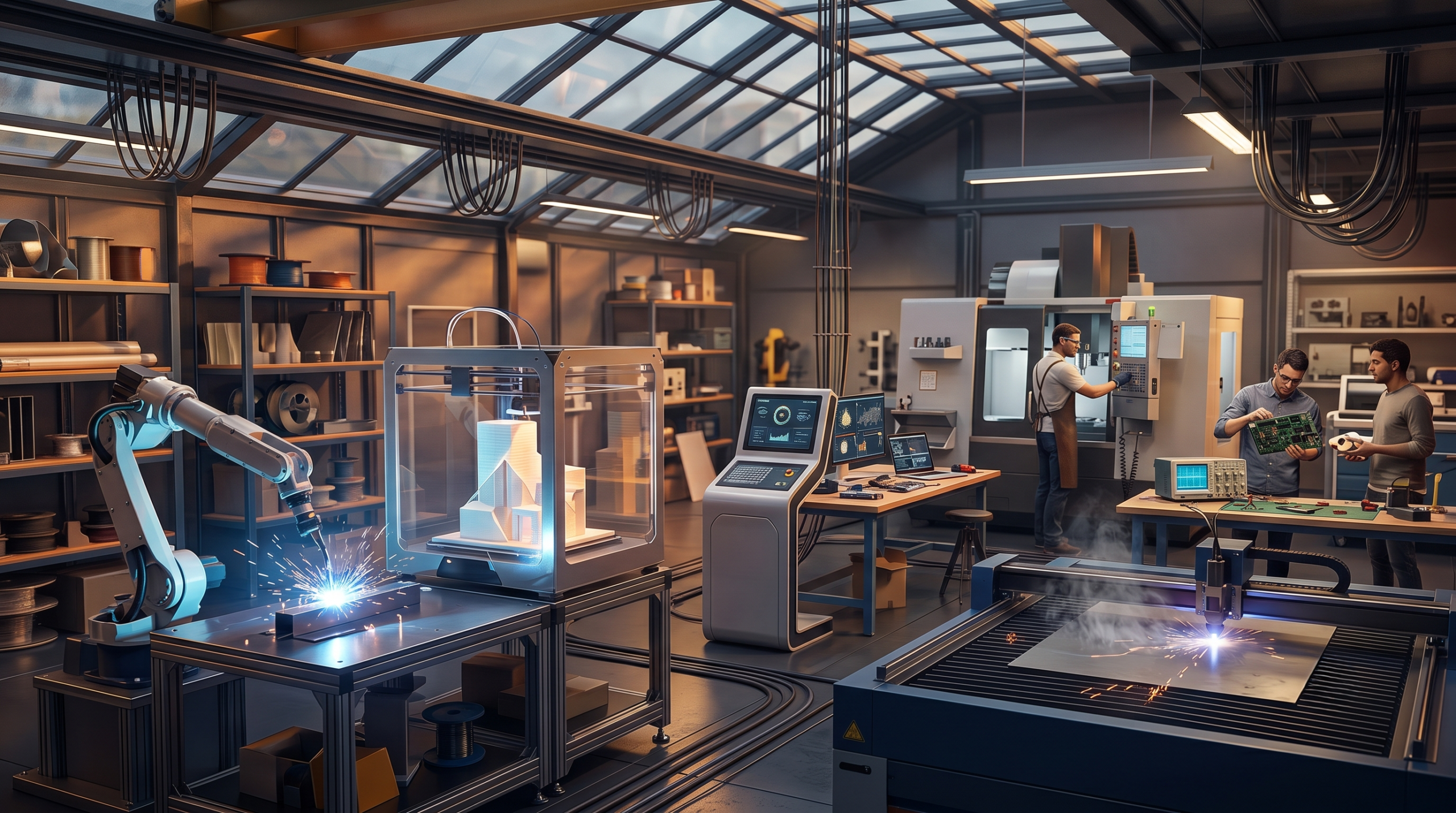
- More Than 3D Printing: While 3D printers are popular, a true fab lab is an ecosystem that includes laser cutters, CNC machines, and electronics stations.
- Budget-Friendly: They are designed for public accessibility, offering affordable memberships, student discounts, and pay-per-use options.
- Prototyping, Not Mass Production: Fab labs are spaces to invent, test, and build one-off ideas—they complement factories rather than replace them.
On This Page
- What is a Fab Lab? (Simple Explanation First)
- Common Fab Lab Misconceptions and the Truth Behind Them
- How Fab Labs Work (Quick Breakdown)
- Final Thoughts on Fab Lab Misconceptions and What They Really Are
- Frequently Asked Questions About Fab Labs
What is a Fab Lab? (Simple Explanation First)
A Fab Lab (fabrication laboratory) is a small-scale community workshop equipped with digital fabrication tools, including 3D printers, laser cutters, and CNC machines—that allows individuals to turn digital designs into physical prototypes. Originally popularized by the MIT Center for Bits and Atoms, the global network now spans thousands of spaces worldwide. These environments are designed to democratize innovation, allowing anyone to create and learn by doing without needing access to industrial manufacturing facilities.
Instead of keeping designs trapped on a screen, this type of space allows people to actually create them. It is commonly used for prototypes, product ideas, school projects, and creative work. These spaces are open to many users, including students, entrepreneurs, designers, engineers, and hobbyists who want to create and learn by doing.
Related: What is a Fab Lab? A Beginner’s Guide to Digital Fabrication Spaces
Common Fab Lab Misconceptions and the Truth Behind Them
Let’s get into the real deal. Below are the most common fab lab myths and what’s actually true.
Misconception #1: Fab Labs Are Only for Engineers or Tech Experts
This is probably the most common misconception.
The Truth: Fab labs are designed for everyone, not just engineers.
While technical skills can help, many of these spaces provide training, beginner workshops, and guided sessions. You don’t need to be an expert to get started.
In fact, many users are:
- Students working on school projects
- Entrepreneurs testing product ideas
- Artists exploring digital fabrication
- Beginners learning hands-on skills
So if you’ve ever thought they are “too technical,” that’s actually one of the biggest myths.
A clearer way to look at it is who can actually use one—and the answer is simple: almost anyone willing to learn.
Misconception #2: Fab Labs Are Expensive to Use
Many people assume that using machines like 3D printers or CNC routers costs a lot.
The Truth: Fab labs are actually built to be affordable and accessible.
Most labs operate on:
- Pay-per-use systems
- Membership or student discounts
- Free or subsidized workshops
The goal is not profit—it’s accessibility.
So instead of buying expensive equipment, users can access tools as needed. This is why fab labs services are often much cheaper than traditional manufacturing setups.
Misconception #3: Fab Labs Are Just 3D Printing Spaces
A lot of people think Fab Labs are just “3D printing rooms.”
The Truth: 3D printing is only one part of what they offer.
These spaces also include a full range of tools such as:
- Laser cutters
- CNC machines
- Vinyl cutters
- Electronics stations
- Design and modeling software
This is where the concept of fab lab equipment and tools becomes important. It’s a full digital fabrication ecosystem, not just one machine.
Misconception #4: Fab Labs Are Only for Schools and Universities
Yes, many fab labs exist in educational institutions, but that’s not the only place they exist.
The Truth: Fab Labs are also found in:
- Community centers
- Private innovation hubs
- Startup incubators
- Research facilities
- Even public-access makerspaces
This expands the idea of what a fab lab is beyond academics. It’s really a community-driven innovation space.
Related: How Fab Labs in the Philippines Are Transforming Education and Innovation
Misconception #5: Fab Labs Replace Traditional Manufacturing
Some people think Fab labs are here to replace factories.
The Truth: Fab labs don’t replace manufacturing—they complement it.
They are mainly used for:
- Prototyping
- Testing product ideas
- Small-batch production
- Design experimentation
Factories are still essential for mass production, while fab labs focus on earlier stages of product development like design and prototyping. This is where the difference becomes clear:
These spaces drive innovation and help refine ideas, while manufacturing handles large-scale production. Instead of competing, they work together—one develops the concept, and the other scales it into finished products.
Misconception #6: You Need to Know How Everything Works Before Using a Fab Lab
Many beginners hesitate because they think they must fully understand machines first.
The Truth: You don’t need to know everything upfront.
Most fab labs provide:
- Introductory training
- Step-by-step machine guidance
- Staff assistance
- Beginner-friendly tutorials
Learning is part of the experience. That’s why understanding how fab labs work is more about exploration than expertise.
In simple terms: You bring the idea. The fab lab helps you figure out how to build it.
Misconception #7: Fab Labs Are Only for “High-Tech” Projects
There’s a belief that fab labs are only for complex engineering or robotics.
The Truth: Fab labs are for both simple and advanced projects.
People use them for:
- Custom phone stands
- Jewelry design
- School prototypes
- Furniture models
- Business packaging prototypes
Even simple creative projects benefit from digital fabrication tools.
How Fab Labs Work (Quick Breakdown)
Here’s a simple step-by-step look at how a Fab Lab process usually works:
1. Idea Creation
You start with a concept, sketch, or product idea you want to build.
2. Digital Design
The idea is turned into a digital file using CAD software or design tools.
3. Machine Selection
You choose the right machine for the job—such as a 3D printer, laser cutter, or CNC machine.
4. Fabrication
The machine brings your design to life by creating a physical version of it.
5. Testing and Improvement
You check the result, make adjustments, and refine the design if needed.
Final Thoughts on Fab Lab Misconceptions and What They Really Are
Fab labs are often misunderstood, but once you break down the misconceptions, it becomes clear that they are one of the most accessible innovation spaces today.
They are not just for experts, not just for schools, and not just for 3D printing. Instead, they are flexible, creative environments where ideas can be turned into real-world prototypes.
So instead of seeing fab labs as something highly technical or out of reach, it helps to view them as open spaces for learning, experimenting, and building without limits.
Frequently Asked Questions About Fab Labs
What is a Fab Lab in simple terms?
A fab lab is a small workshop where people use digital tools like 3D printers, laser cutters, and CNC machines to turn digital designs into physical objects.
Who can use a Fab Lab?
Fab labs are open to everyone, including students, entrepreneurs, designers, engineers, and hobbyists who want to create, learn, and experiment.
Do you need experience to use a Fab Lab?
No. Most fab labs are beginner-friendly and provide training, guidance, and workshops for first-time users.
What can you make in a Fab Lab?
You can make prototypes, product designs, models, custom parts, and creative projects for learning or innovation.
Is a Fab Lab expensive to use?
Not usually. Many fab labs offer affordable access through pay-per-use systems, memberships, student discounts, or subsidized programs.
How does a Fab Lab work?
A fab lab works by turning digital designs into physical objects. Users create a design, choose the right machine (such as a 3D printer or CNC machine), fabricate the object, then test and refine it.
Curious about what you can create? Explore Fab Lab services in the Philippines and see how digital fabrication can bring your ideas to life.