

Blog
3D Printing in Dentistry: Applications, Benefits, and Future Trends

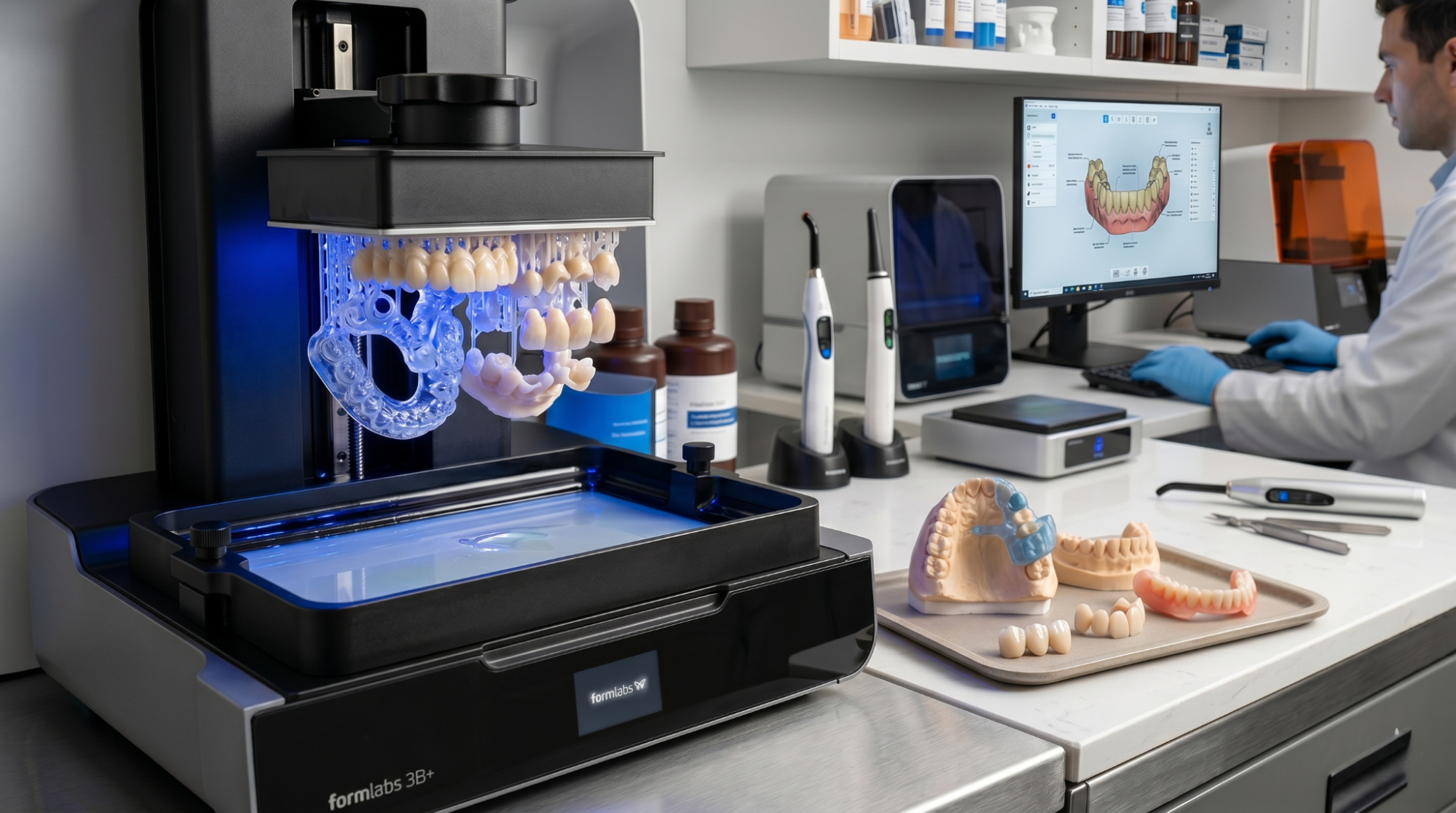
Dentistry has always been about precision, comfort, and innovation. Over the past decade, 3D printing in dentistry has steadily transformed how professionals create dental appliances, plan treatments, and interact with patients. From faster production to customized solutions, this technology is reshaping the industry in ways that were difficult to imagine just a few years ago.
In this article, we’ll explore the applications, benefits, and future trends of 3D printing in dentistry, including how it’s making its mark in the Philippines and beyond.
Quick Summary: 3D Printing in Dentistry
3D printing in dentistry uses digital scans and CAD/CAM technology to produce implants, crowns, dentures, and surgical guides with high precision and faster turnaround times.
- Core Applications: Streamlines the creation of 3D-printed implants, same-day crowns, dentures, and high-precision surgical guides for complex procedures.
- Key Benefits: Drastically increases precision and speed, reducing production time from days to hours while improving patient comfort and cost-effectiveness.
- Adoption in the Philippines: Rapid growth in Metro Manila and Cebu, where digital labs are standardizing local aligner production.
- Future Trends: The industry is moving toward AI-driven treatment planning and bioprinting for tissue regeneration.
- The Bottom Line: Digital dentistry replaces manual errors with digital accuracy, leading to better patient outcomes and sustainable clinic growth.
On This Page
- Key Applications of 3D Printing in Dentistry
- Benefits of 3D Printing in Dentistry
- Challenges and Considerations
- Future of 3D Printing in Dentistry
- Frequently Asked Questions About 3D Printing in Dentistry
Key Applications of 3D Printing in Dentistry
3D printing in dentistry isn’t just a novelty—it’s a versatile tool that addresses multiple areas in dental care. Here are some of the most common applications:
1. 3D-Printed Dental Implants
Dental implants are one of the most significant applications of 3D printing in dentistry. Traditionally, implants require multiple visits, custom shaping, and adjustments. With 3D printing, dental labs can produce 3D-printed dental implants that match a patient’s anatomy precisely.
The advantages? Faster production, fewer adjustments, and higher patient satisfaction. Plus, dentists can plan surgeries using printed models to anticipate potential challenges before even stepping into the treatment room.
2. Crowns, Bridges, and Veneers
Creating crowns, bridges, and veneers manually can be time-consuming. 3D printing in dentistry allows technicians to produce these components within hours rather than days. The result is a durable, precise, and aesthetically pleasing restoration that fits perfectly.
3. Dentures and Orthodontic Appliances
Custom dentures and orthodontic appliances benefit immensely from this technology. With a scan of the patient’s mouth, technicians can design appliances that fit snugly and comfortably. This not only improves the patient experience, but also reduces the risk of misalignment or discomfort often associated with conventional methods.
4. Surgical Guides and Models
For complex dental surgeries, 3D-printed surgical guides can be lifesavers. These guides ensure implants and other procedures are placed accurately, reducing the chance of errors. Additionally, dentists can create physical models of a patient’s jaw or teeth to plan treatments and communicate more effectively with patients.
Benefits of 3D Printing in Dentistry
Now that you know where it’s used, let’s talk about why so many clinics and dental labs are adopting this technology. The benefits of 3D printing in dentistry go beyond just innovation—it’s about improving both efficiency and patient outcomes.
1. Precision and Accuracy
One of the biggest advantages of this technology is its ability to produce highly accurate dental appliances. Digital scans and advanced software ensure a precise fit for crowns, aligners, and implant structures, reducing the need for adjustments.
2. Speed and Efficiency
Compared to traditional methods, 3D printing significantly reduces production time. Dental restorations that once took days can now be completed within hours, allowing for faster treatment and improved patient satisfaction.
This is especially valuable for high-volume dental clinics in the Philippines, where faster turnaround times improve patient flow and operational efficiency.
Related: The 5 Must-Know Benefits of 3D Printing
3. Customization
Every patient has unique dental needs. With 3D printing, dentists can create fully customized solutions, from dentures to surgical guides, ensuring better comfort and functionality.
4. Cost-Effectiveness
While the initial investment may be high, dental 3D printing helps reduce labor costs, material waste, and the need for remakes. Over time, this makes it a more cost-effective solution for clinics and laboratories.
5. Improved Patient Experience
Faster turnaround times, better-fitting appliances, and fewer appointments all contribute to a smoother and more convenient experience for patients.
With these advantages, it’s clear why more professionals are adopting this technology—but like any innovation, there are still a few considerations to keep in mind.
Challenges and Considerations
While 3D printing in dentistry offers many benefits, there are still some key factors to consider.
1. High Initial Investment
3D printers, materials, and software can be costly, especially for smaller clinics. However, the long-term savings often justify the investment.
2. Training and Learning Curve
Dental professionals need proper training to operate 3D printing equipment and design software effectively.
3. Material Limitations
Not all materials used in traditional dentistry are available for 3D printing. Some applications may still require conventional methods.
4. Maintenance and Equipment Upkeep
Regular maintenance is necessary to ensure consistent print quality and avoid disruptions in workflow.
Future of 3D Printing in Dentistry
The future of 3D printing in dentistry is focused on innovation, accessibility, and even more personalized care.
1. Bioprinting and Regenerative Dentistry
Researchers are exploring ways to print tissues and bone structures, which could revolutionize dental treatments in the future.
2. AI and Digital Integration
Artificial intelligence is being integrated into digital dentistry, helping improve design accuracy and treatment planning.
3. Growth of 3D Printing in the Philippines
3D printing in the Philippines is steadily gaining traction, with more clinics and labs adopting the technology to improve efficiency and patient care.
4. Sustainable Dental Solutions
With reduced material waste and more efficient processes, 3D printing is also contributing to more sustainable dental practices.
Frequently Asked Questions About 3D Printing in Dentistry
Is 3D printing in dentistry expensive?
While the initial investment is high, it reduces long-term costs through faster production and fewer remakes.
How long does 3D printing take for dental products?
Most dental appliances can be produced within a few hours, compared to days using traditional methods.
Is 3D printing in dentistry available in the Philippines?
Yes, many dental clinics and labs in the Philippines are now using 3D printing to improve efficiency and patient care.
What are the most common uses of 3D printing in dentistry?
It is widely used for implants, crowns, dentures, orthodontic appliances, and surgical guides.
Is 3D printing in dentistry safe?
Yes, 3D printing in dentistry is safe when used by trained professionals and with biocompatible materials designed for medical use. Clinics follow strict safety and sterilization standards to ensure patient safety.
Looking for faster and more precise production? Get 3D printing solutions in the Philippines for precise prototyping and bring your ideas to life with accuracy and efficiency.
Last Updated: May 15, 2026