


Blog
What Is Concrete 3D Printing? A Beginner’s Guide

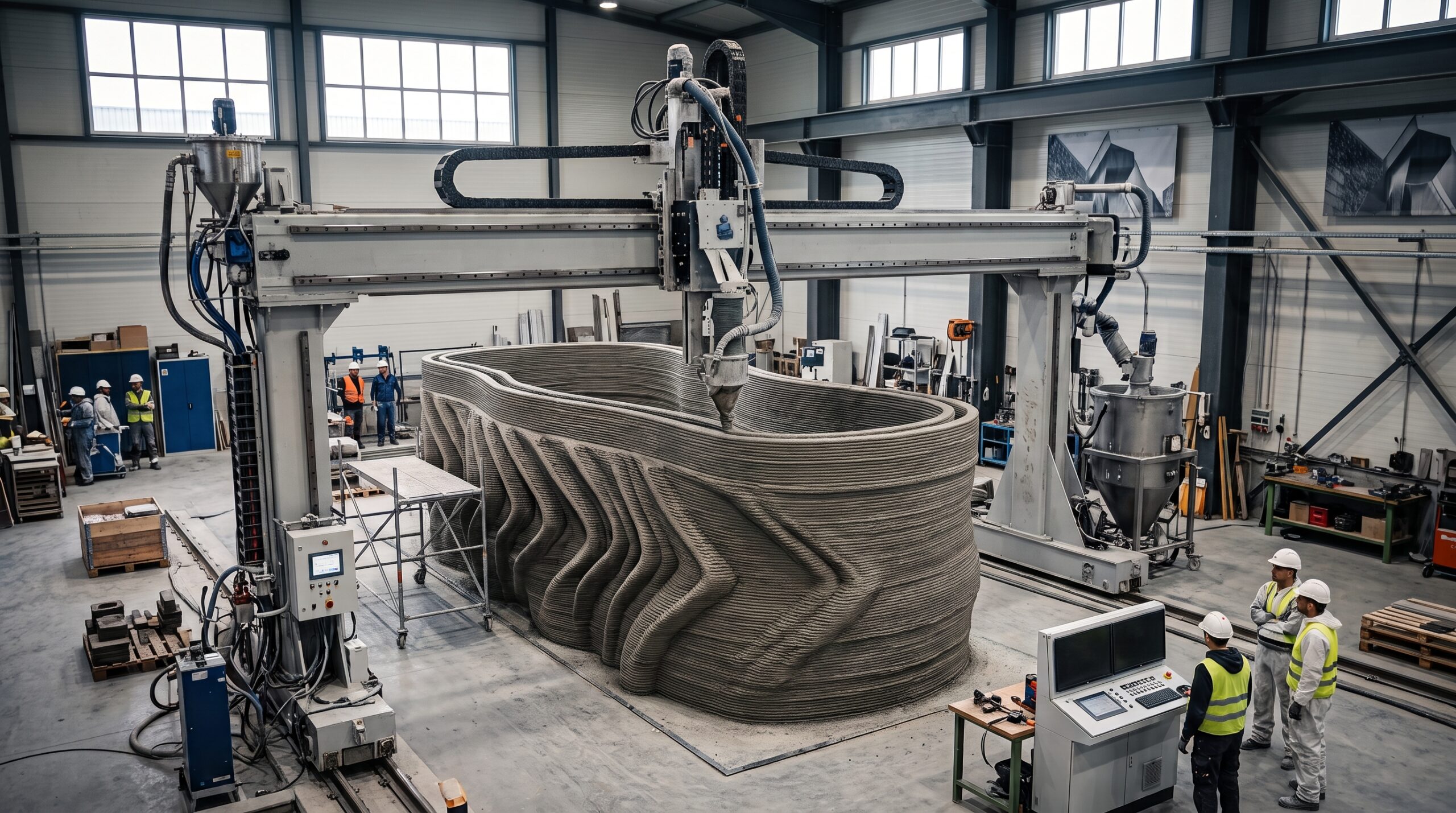
Concrete 3D printing is a construction method that uses automated equipment to deposit specially formulated concrete or cement-based material layer by layer, creating walls, structures, and other building components from a digital design.
Instead of relying entirely on traditional molds, formwork, and manual material placement, a concrete 3D printer follows a programmed path to build the desired shape. This approach can also make it easier to create customized designs while automating parts of the construction process.
So, how does it work in practice? What materials are used, and what can you build with it?
This beginner’s guide explains how the technology works, its benefits and applications, and where it fits into modern construction.
Key Takeaways: Concrete 3D Printing
- Concrete 3D printing builds structures and components layer by layer from a digital design.
- A concrete 3D printer deposits cement-based material through a programmed path to create the desired shape.
- A typical printing setup can include a gantry system or robotic arm, mixing system, pump, hoses, print head, nozzle, and control software.
- 3D printed concrete uses specially formulated cement-based materials designed for pumping, extrusion, and layer-by-layer construction.
- The concrete 3D printing process typically includes digital design, material preparation, printing, curing, and additional construction work.
- Benefits can include design flexibility, automated material deposition, and less reliance on some types of formwork.
- 3D printing in construction can work alongside traditional construction methods, since reinforcement, utilities, roofing, finishing, and other work may still be needed.
- Its suitability depends on the project, materials, equipment, site conditions, structural requirements, and applicable building regulations.
On This Page
- What is Concrete 3D Printing?
- How Does Concrete 3D Printing Work?
- What Is a Concrete 3D Printer?
- What Equipment Is Needed for Concrete 3D Printing?
- What Materials Are Used in Concrete 3D Printing?
- What Are the Benefits of Concrete 3D Printing?
- Where Is Concrete 3D Printing Used?
- 3D Printing in Construction vs. Traditional Construction
- What Are the Limitations of Concrete 3D Printing?
- Is Concrete 3D Printing the Future of Construction?
- Concrete 3D Printing: Final Thoughts
- Frequently Asked Questions About Concrete 3D Printing
What Is Concrete 3D Printing?
Concrete 3D printing is a construction process that uses automated 3D printing equipment to deposit cement-based material layer by layer based on a digital design. The printer extrudes a thin layer of material along a programmed path, then places the next layer on top until the desired shape and height are reached. This method can be used to create walls, structural components, architectural features, and other construction elements, offering another approach to certain parts of a building project.
How Does Concrete 3D Printing Work?
The basic concept is simple: a digital model is created using computer-aided design or similar software, then converted into instructions that tell the printer where and how to deposit the material.
From there, the concrete 3D printing process generally follows several key steps.
1. Create a Digital Design
Everything starts with a digital model created using design software by engineers, architects, or designers. The model defines the structure’s dimensions, shape, printing path, and other project requirements, allowing complex designs to be translated into instructions for the printing system.
2. Prepare the Printing Material
The material must have the right characteristics for the printer and the intended application.
Unlike ordinary concrete that is simply poured into a form, material used for 3D printing needs to flow through the printer nozzle while also maintaining enough shape after deposition.
Its properties can affect factors such as:
- Printability
- Layer adhesion
- Setting time
- Strength development
- Surface finish
- Stability during printing
Material formulation is therefore an important part of the process.
3. Load the Material Into the Printer
The prepared material is fed into the printing system.
A typical setup may include a material mixing or pumping system, hoses, a print head, and a robotic or gantry-based movement system. The exact configuration depends on the equipment being used.
4. Print Layer by Layer
Unlike traditional construction, the printer follows a predetermined path and extrudes material through a nozzle. It places each layer on top of the previous one, gradually forming the desired wall, component, or structure.
The digital design is converted into instructions that guide the printer’s movement, including where to move and where to deposit material. This allows the printer to follow precise paths and reproduce the design consistently.
5. Allow the Structure to Cure and Continue Construction
After printing, the material needs time to cure and develop its intended properties. Depending on the project, additional work may also be needed, such as reinforcement, utilities, roofing, doors, windows, and finishing.
For beginners, it is important to remember that 3D printing does not automatically complete an entire building. The printer handles specific parts of the construction process, while other building systems and finishing work still need to be completed separately.
What Is a Concrete 3D Printer?
A concrete 3D printer is specialized equipment that deposits cement-based construction material based on a digital model. Unlike desktop 3D printers that use plastic filament, these systems handle much larger volumes of material and can use different configurations, including robotic arms or gantry-style systems that move the print head along predefined paths.
What Equipment Is Needed for Concrete 3D Printing?
Concrete 3D printing requires more than the printer itself. A typical setup combines a gantry system or robotic arm to move the print head, equipment that mixes and pumps the cement-based material, and software and controls that guide the printing process.
Common equipment includes:
- Gantry system or robotic arm: Moves the print head along programmed paths. Gantry-based systems move the print head along fixed axes, while robotic arms provide more flexible movement and can reach different angles and positions.
- Mixing system: Prepares the cement-based printing material and helps maintain a consistent mixture.
- Pump: Moves the material from the mixing system to the print head through hoses.
- Hoses and piping: Carry the material from the pump to the printing nozzle.
- Print head and nozzle: Extrude the material and determine the size and shape of each deposited layer.
- Control system and software: Translate the digital design into instructions that guide the printer’s movement and material deposition.
The exact equipment setup varies depending on the printer, material, printing method, and project requirements. Some systems may integrate several of these components into a single setup, while others use separate equipment.
What Materials Are Used in Concrete 3D Printing?
Concrete 3D printing uses cement-based material, but it is not traditional poured concrete. Conventional concrete is typically placed into formwork, while 3D printing requires a mixture that can flow through hoses and a printer nozzle while maintaining its shape after deposition.
The material needs to flow smoothly through the printing system, form consistent layers after extrusion, and support the layers placed on top of it. For 3D concrete printing to work properly, the material generally needs four key properties:
- Pumpability: The ability of the wet mixture to flow through hoses under pressure without blockages or separation of its components.
- Extrudability: The ability of the material to pass smoothly through the nozzle and form a continuous layer without tearing, excessive deformation, or other printing defects.
- Buildability (Green Strength): The ability of a freshly printed layer to retain its shape and support the weight of subsequent layers without collapsing.
- Open Time: The period during which the material remains workable and printable before it begins to set and becomes difficult to pump or extrude.
In short, 3D printed concrete relies on specialized cement-based mixtures rather than standard heavy pours. Some systems, such as COBOD’s concrete 3D printing technology, are designed to use locally sourced concrete and standard materials rather than proprietary dry mixes. This approach can give projects more flexibility in sourcing materials, depending on local suppliers, equipment requirements, and the specific mix used.
What Are the Benefits of Concrete 3D Printing?
The potential advantages of concrete 3D printing depend on the equipment, material, design, and project. However, several characteristics make the technology useful for certain construction applications.
Design Flexibility
Digital fabrication makes it easier to produce curved walls, customized geometries, and other shapes that may require more complex formwork with conventional methods. This gives architects and designers greater flexibility when exploring customized construction.
Less Dependence on Traditional Formwork
Conventional concrete construction often uses molds or formwork to hold wet concrete in the desired shape. With 3D printing, the printer creates the geometry directly through successive layers of material. This can reduce the need for certain types of temporary formwork, depending on the project.
Automated Material Deposition
The printer follows a programmed path to place material according to the digital design. This can make repetitive placement tasks more consistent while reducing the amount of manual material handling needed for suitable applications.
Potential Material Efficiency
Material is deposited along a predefined path, giving the printing system greater control over where it is placed. In suitable applications, this may help reduce material waste. Actual material use depends on factors such as the design, mixture, printing system, structural requirements, and overall construction process.
Digital Workflow
Concrete 3D printing connects digital design directly with physical fabrication. A digital model can be converted into machine instructions that guide the printer, creating a more streamlined workflow from design to production. This can also make design changes easier to transfer to the printing system and support more consistent fabrication.
Where Is Concrete 3D Printing Used?
Concrete 3D printing can be used for more than simply constructing entire buildings. Depending on the equipment, materials, and project requirements, it can support applications such as:
- Building walls
- Housing components
- Architectural structures
- Construction prototypes
- Customized building elements
- Landscaping features
- Small-scale structures
- Complex architectural forms
- Specialized construction components
The most suitable application depends on the printer’s capabilities, material properties, structural requirements, regulations, and project goals.
In the Philippines, the technology could be relevant to projects that require customized building components, alternative construction approaches, or automated fabrication, depending on site conditions, project requirements, available equipment, and applicable regulations.
3D Printing in Construction vs. Traditional Construction
3D printing in construction does not have to replace traditional construction. Conventional methods remain important because they offer established processes, a wide range of materials, and skilled trades that are already widely used across the industry.
Related: 3D Printing in Construction: The Advantages and Disadvantages
Instead, the two approaches can work together. A project could combine automated printing with conventional reinforcement, electrical and plumbing work, roofing, finishing, and other construction activities.
| Aspect | 3D Printing in Construction | Traditional Construction |
|---|---|---|
| How it works | Builds layer by layer from a digital design | Uses established building methods |
| Design | Supports custom and complex shapes | Uses conventional plans and methods |
| Material placement | Deposits material automatically | Materials are placed or installed using conventional methods |
| Formwork | Can reduce the need for some formwork | Commonly used formwork for concrete structures |
| Skilled work | Automates some tasks but still needs skilled workers | Relies on skilled workers across different stages |
| Other construction work | Can be combined with reinforcement, plumbing, wiring, roofing, and finishing | Handles these tasks using conventional techniques |
| Typical use | Selected components and custom designs | A wide range of construction projects |
| How they work together | Prints suitable components while teams handle other work | Completes the remaining construction work |
For construction projects in the Philippines, 3D printing can be considered alongside conventional construction methods rather than as a complete replacement. Reinforcement, plumbing, electrical work, roofing, finishing, and other project requirements may still involve conventional construction processes.
What Are the Limitations of Concrete 3D Printing?
Concrete 3D printing requires specialized equipment, properly formulated materials, and technical knowledge. Project teams also need to manage factors such as structural requirements, site conditions, curing, reinforcement, building regulations, and finishing work.
The technology also has a learning curve. Developing a reliable workflow from digital design to printed construction requires the right equipment, materials, software, and processes. Not every project will be suited to this approach, especially when its design, size, location, or material requirements do not fit the capabilities of the printing system.
Ultimately, concrete 3D printing works best when its capabilities match the needs of a specific project. It can handle certain parts of construction, but other tasks may still require conventional methods and skilled construction teams.
Is Concrete 3D Printing the Future of Construction?
Concrete 3D printing could become a useful part of modern construction, especially for projects that benefit from automated fabrication, customized designs, and digital workflows. Its wider adoption will depend on factors such as equipment capabilities, material development, construction requirements, regulations, and project costs.
Concrete 3D Printing: Final Thoughts
At its core, concrete 3D printing combines digital design, automated fabrication, and specialized materials to create structures layer by layer. The technology gives construction professionals another way to approach certain building components and project requirements.
Understanding the concrete 3D printing process is a useful starting point for companies, designers, and construction professionals exploring the technology. From there, the right equipment, materials, and workflow can be evaluated based on the needs of each project.
Frequently Asked Questions About Concrete 3D Printing
Is concrete 3D printing the same as regular 3D printing?
The basic principle is similar because both processes create objects layer by layer from digital designs. The major difference is the scale and material. Construction 3D printers are designed to handle cement-based materials and much larger structures.
How does a concrete 3D printer work?
A concrete 3D printer receives digital instructions and deposits a printable cement-based material through a nozzle. The print head moves along a programmed path, placing successive layers until the desired geometry is produced.
What can be made with concrete 3D printing?
Depending on the equipment and project requirements, the technology can be used for walls, architectural elements, building components, prototypes, small structures, and other customized construction applications.
Is 3D printed concrete strong?
The strength and performance of a printed structure depend on factors such as material formulation, layer bonding, curing, geometry, reinforcement, printing parameters, and construction design. A printed structure therefore needs to be evaluated according to the requirements of its specific application.
Can concrete 3D printing be used in the Philippines?
Yes, concrete 3D printing can potentially be used for construction applications in the Philippines, but its suitability depends on the project, equipment, materials, site conditions, engineering requirements, and applicable building regulations. Projects must comply with the National Building Code of the Philippines (PD 1096) and other applicable building and structural requirements.
Some concrete 3D printing systems can also use locally sourced materials, which may give project teams greater flexibility in material sourcing depending on the equipment, mix requirements, and availability of local suppliers.
Looking for practical ways to apply 3D printing to your project? Explore 3D printing services in the Philippines for construction and industrial applications and find solutions that fit your specific requirements. Get in touch with us today!