

Controlled Moisture for Consistent Processing

Hygroscopic materials require controlled drying before extrusion and validation.

Work with our team to assess drying needs and integrate them into your material workflow.

Designed for Controlled Material Preparation

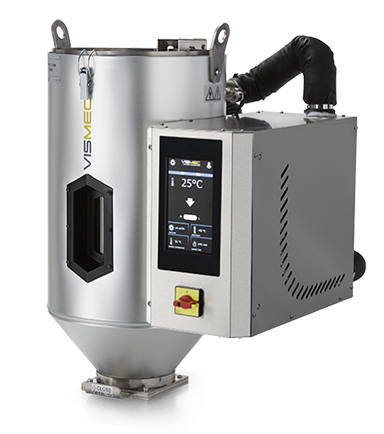
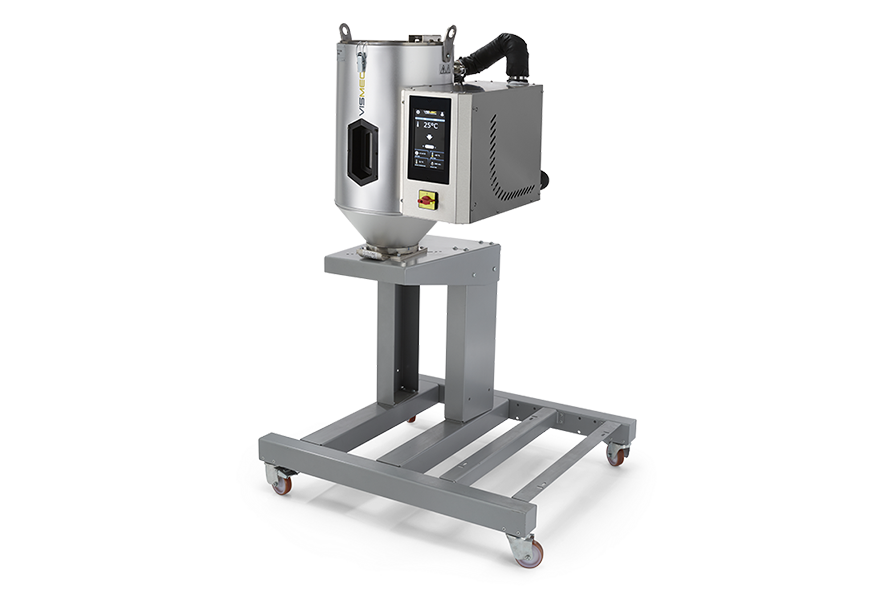
DW14 is a desiccant dryer that removes moisture from thermoplastics before extrusion and validation. It enables reliable material preparation across lab, R&D, and pilot settings, ensuring stable conditions for downstream processing.

Designed for Controlled Material Preparation

DW14 is a desiccant dryer that removes moisture from thermoplastics before extrusion and validation. It enables reliable material preparation across lab, R&D, and pilot settings, ensuring stable conditions for downstream processing.

Drying Specifications for Materials

Moisture plays a critical role in filament production, directly impacting extrusion stability and final part quality.

Enhances melt stability and final part quality

Minimizes bubble formation and weak layer defects

Critical for engineering-grade and recycled materials

Ensures repeatable processing outcomes

Enhances melt stability and final part quality

Minimizes bubble formation and weak layer defects

Critical for engineering and recycled materials

Ensures repeatable processing outcomes

How It Fits Into Your Workflow

Moisture control supports reliable processing throughout the material workflow, from preparation to extrusion.

Stable drying conditions help reduce variability during extrusion, supporting consistent and repeatable results.

Ensures stable material input before extrusion

Accommodates materials with different moisture sensitivities

Minimizes batch-to-batch variability

Enhances repeatability of processing outcomes

Ensures stable material input before extrusion

Accommodates materials with different moisture sensitivities

Minimizes batch-to-batch variability

Enhances repeatability of processing outcomes

Drying Process Overview

Desiccant drying eliminates moisture from thermoplastics before processing, supporting stable and predictable behavior during extrusion.

Removes moisture through controlled airflow and low-humidity conditions for stable drying performance.

Ideal for processing hygroscopic materials, including PET, PA, and PEEK.

Ensures consistent input conditions for extrusion.

Removes moisture through controlled airflow and low-humidity conditions for stable drying performance.

Ideal for processing hygroscopic materials, including PET, PA, and PEEK.

Ensures consistent input conditions for extrusion

System Capabilities

Drying Stability

Low humidity and stable temperature environments are maintained to minimize moisture absorption in hygroscopic materials.

  • Supports drying of materials such as PET, PA, and PEEK
  • Helps stabilise material behavior before extrusion
  • Suitable for both virgin and recycled material streams

Defect Reduction

Minimize the impact of moisture on material performance during extrusion and testing.

  • Helps minimise moisture-related defects
  • Supports repeatable processing conditions across batches
  • Contributes to more predictable results in downstream workflows

Workflow Fit

Integrated into broader setups where drying is necessary prior to extrusion or validation.

  • Positioned upstream of extrusion systems
  • Compatible with lab, R&D, and pilot setups
  • Integrated where material sensitivity requires controlled drying

Stable Operation

Built for lab and pilot environments requiring controlled material conditioning.

  • Supports continuous drying during operation
  • Suitable for different material types and batch sizes
  • Operates as a supporting component within the overall system

FAQ

What is a desiccant wheel dryer?

A desiccant wheel dryer is an advanced drying system that uses a rotating honeycomb desiccant wheel to continuously remove moisture from process air.

Compared to traditional twin-tower systems, this approach delivers:

  • more stable drying conditions
  • lower energy consumption
  • reduced maintenance requirements
Do I need a dehumidifying dryer to create filament?

Yes, drying thermoplastic materials before extrusion is essential for achieving consistent and reliable results.

Moisture in the material can lead to:

  • bubbles and surface defects
  • material degradation
  • unstable extrusion and diameter inconsistencies

Proper drying ensures materials are conditioned before processing, supporting consistent output and material performance.

Can I use it with GP20?

Yes, the DW14 can be used to dry plastic granulate produced by the GP20 Shredder. The GP20 produces granules smaller than 4 mm, making them suitable for efficient and consistent drying within the DW14.

TECHNICAL SPECIFICATIONS
SYSTEM PERFORMANCE
Temperature50 - 185 °C
Air Flow3 - 14 m³/h
Power Supply1 P + N 240 V
Heating Power0,45 kW
Installed Power0,95 kW
Dew Pointdown to -40 °C
Energy at 80 °C0,06 kW/kg/h
Energy at 120 °C0,06 kW/kg/h

Start printing your own metal parts today

Talk to our experts via Online consultation and request for a demo